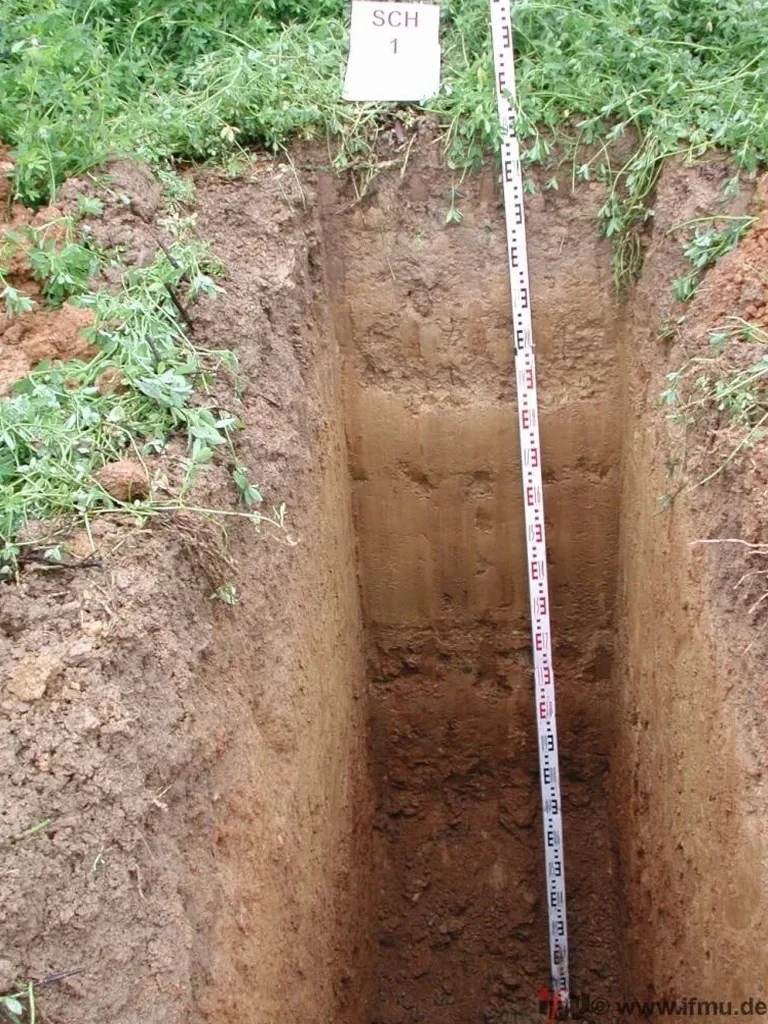
Naas grew fast along the old Dublin-Cork turnpike, but the ground beneath those roads is a patchwork of glacial till and limestone gravel. You cannot assume uniform bearing capacity here. An exploratory test pit gives you the raw visual truth that a borehole log sometimes misses. We open precisely where the load goes — under a footing, behind a retaining wall, at the exact depth of a proposed pipe invert. In the last twelve months our team has logged pits from Monread to Millennium Park, dealing with everything from dense boulder clay to perched groundwater at 1.2 metres. For deeper resistance data we pair the pit log with our Spt Drilling crew, and when the soil looks borderline we run a quick Cbr Road check right from the pit floor.
A single test pit logged at the right location replaces three pages of assumptions in a desk study.
Service characteristics in Naas
Risks and considerations in Naas
The most expensive mistake we see in Naas is treating a test pit as a quick hole in the ground without recording the groundwater strike. A contractor digs three metres, sees stiff clay, backfills, and never notes the seepage at 2.2 metres. Six months later the foundation excavation floods and the programme slips by two weeks. Another common failure is ignoring made ground. Parts of Naas near the old canal and railway yards have reworked fill containing brick, ash, and organic pockets. That material compresses unevenly under load. A properly logged test pit identifies the fill boundary, its composition, and its thickness — data that directly feeds the Retaining-walls design or the decision to over-excavate and replace.
Our services
Every test pit we excavate feeds into a wider site characterisation package. These three solutions are the ones our Naas clients request most often alongside exploratory pits.
Foundation Inspection Pits
Excavated directly adjacent to existing or proposed footings to verify bearing stratum, confirm depth to competent ground, and collect undisturbed samples for shear strength testing.
Pavement Investigation Pits
Targeted pits through road or car park layers to measure asphalt thickness, base course quality, and subgrade CBR. Essential for the Naas area where legacy roads sit on variable glacial deposits.
Utility Feasibility Pits
Shallow investigation to locate existing solutions, assess trench stability, and check groundwater conditions before open-cut sewer or stormwater installation.
Quick answers
How much does an exploratory test pit cost in Naas?
For a standard investigation in the Naas area, exploratory test pits typically range from €440 to €780 per pit. The final figure depends on depth, access constraints, the number of pits mobilised on the same day, and whether laboratory testing is required on the recovered samples. We supply a fixed-price quotation after reviewing your site location and intended investigation depth.
How deep can you excavate a test pit safely?
With a standard backhoe on firm ground, we reach 4.5 metres routinely. Beyond that depth, or in loose granular soils, trench support becomes mandatory under HSA excavation regulations. In those cases we switch methodology — either stepping the pit or moving to a borehole investigation to keep the crew safe.
What is the difference between a test pit and a borehole?
A test pit exposes a continuous vertical face you can inspect visually, photograph, and sample by hand. A borehole gives you a log based on recovered cuttings and occasional cores. Pits excel at revealing structure — fissures, lenses, fill boundaries — while boreholes go deeper and handle groundwater better. We often combine both on the same Naas site.
Do I need a test pit before building a house extension in Naas?
Most local authorities in County Kildare expect site-specific ground investigation data with a planning application for extensions, especially where the existing structure shows cracking or where the ground slopes toward a watercourse. A single test pit on the extension footprint, logged to I.S. 5930, is usually sufficient to satisfy the engineer's certification requirements.